

Questions to Ask About Flexibility in a Job Interview
October 28, 2026
The job sounds promising, but would leaving for school pickup mean opening your laptop again after bedtime? The questions to ask about flexibility in a job interview start with the team’s typical workday, core hours, on-site responsibilities, and what changes during busy periods. Then ask directly whether the arrangement you need is available in this role. For a deal-breaker, clarify the days, times, conditions, and who can confirm it before accepting an offer.

You’re looking for a job in STEM that offers the flexibility you need as a working mom. But what questions can you ask during an interview to find out whether the flexibility you need is actually available?
And how do you ask about flexible working during an interview without sounding like you don’t want to work?
Of course, you also want them to see what you’d bring to the team. Asking about the hours doesn’t have to mean walking them through your whole family schedule: you can keep the conversation focused on the work and when you need to be available.
I’ve asked about remote work at a time when it wasn’t common practice. I’ve also asked whether I could come in with nontraditional working hours. Location and hours are separate questions, and you may need an answer to both.
“Flexible” could mean working remotely, adjusting your start and finish times, or stepping away during the day. Those arrangements don’t necessarily go together: a remote role might still have fixed core hours or require evening availability. Asking about each arrangement separately helps you find out whether the flexibility you need is available.
You’ll also want to understand what happens during busy periods such as grant-writing season or in the weeks leading up to a regulatory filing, and whether the flexibility you need would still be available then.
Before choosing your interview questions about job flexibility, decide which arrangements would be nice to have and which ones are deal-breakers.
To make preparing for that conversation easier, this article gives you questions you can adapt, suggestions for whom to ask, and ways to follow up when an answer leaves you unsure. Pick the questions that matter to your situation. You don’t need to ask them all.
In this article
- How to ask about flexible work during an interview
- Questions about normal work, hours, location, and what busy periods look like
- How to state a deal-breaker professionally
- When to ask, whom to ask, and how to follow up
Questions to ask about flexibility in a job interview
It can be easier to talk about flexibility once you’ve heard how the team works. You might start with a question about a typical workday, then ask what changes when a deadline is coming up. As the interviewer describes those expectations, you can follow up on anything that could affect the hours or flexibility you need. Just make sure that, if an arrangement is a deal-breaker for you, you leave with a direct answer about whether it’s available in this role.
The questions below give you a few ways to have that conversation, so pick the few that fit your situation. There’s no need to ask something they’ve already answered. You also don’t want the conversation about flexibility to define the entire interview, so be selective and strategic.
What does an ordinary workday look like?
1. “Could you walk me through a typical day in this role, including when the team usually works together?”
Listen for fixed meetings, workflows, and on-site responsibilities. If the answer stays broad, follow up: “What time does the team usually start and finish?”
2. “What does doing this role well require in terms of availability?”
This connects your professional curiosity to practical expectations. Ask for a recent example if a vague response (e.g., “whatever it takes”) leaves you unsure.
But, if you’d rather not make working hours the focus, you can ask about availability alongside a couple of other things: “What does doing this role well require in terms of skills, communication, and availability?” My typical recommendation is to keep each question targeted so that you will get a clear and focused response.

Flexible hours questions to ask in an interview
3. “Are there core working hours when everyone needs to be available?”
At one research consulting firm where I worked, there were 4 core hours that everyone across the company had to be working and reachable. Each staff member had more flexibility outside that core window of time.
If core hours haven’t come up during the interview, ask whether the team has them. And clarify whether those hours apply on remote days too. Working from home won’t answer a question about whether you can step away at 3:30 pm.
4. “Would a regular earlier start and finish be workable in this role?”
You can start with this question in general terms to understand whether there is precedent or a process for adjusted hours.
Depending on your comfort level and how much of a requirement you have for flexible hours, you can get specific about the schedule you need during the interview. If it’s not a deal-breaker, you could wait until after you’re hired to ask about your preferred schedule, without assuming it will be available. If it is a deal-breaker, ask directly about the days and times you need before accepting.
Either way, find out whether the team can make it a regular arrangement or whether you’d need to ask permission each time. For example: “Could I leave at 4 on Tuesdays and Thursdays every week, or would I need approval each week?”
5. “Which responsibilities have to happen on site, and how are those times scheduled?”
The details to ask about will depend on the work. In a lab, clinical setting, or equipment-based role, you’ll want to know which tasks happen at fixed times and how coverage is arranged. For software or data work, that might mean asking when you need to collaborate with the team or be available during a release. In either case, you’re trying to understand which commitments are fixed and where you’d have room to adjust your schedule.

Interview questions about after hours expectations
6. “What evening or weekend availability is expected, and how is coverage planned?”
If evening or weekend work is part of the role, ask how often it comes up and how much notice you’d get. It’s also worth asking whether you’d need to respond to messages right away, since being on call is a different commitment from receiving an occasional evening email that can wait until morning.
7. “During peak periods, what would this role be responsible for, and how would hours change?”
Substitute the relevant deadline, for example a:
- grant submission
- product launch
- major software release
- clinical trial milestone
- regulatory filing
- manufacturing validation deadline
- conference presentation
- project delivery deadline
Follow up about how long that period lasts and what happens to the usual schedule.
What flexibility do people in this role actually use?
8. “I’ve seen similar roles offer [specific flexible arrangement]. Would that be an option for someone joining this team?”
This is something that could benefit from some prior research. Explore what flexible work looks like for the role you are being considered for and note the ideal arrangements for you. See if anyone in your network can share their experiences with flexible work in a similar position. That way you have some concrete examples to share.
During the interview, you can check whether the same option would be available to someone joining their company.
9. “What would your flexible-work policy look like in practice for someone in this role?”
If the company has a flexible-work policy, you’ll still want to know how it applies to your role. And also check who would need to approve your work arrangements and whether any conditions would apply, such as a waiting period before the arrangement can start. If no policy has come up and this is important to helping you weigh job offers, you could ask: “What flexible-work options are available for this role?”
10. “What does support for working mothers look like at this company?”
If you’re comfortable sharing that you’re a mother, this question can help you explore the support available. I’d direct questions about company policies, benefits, and facilities to HR or the recruiter, while the hiring manager can explain how those arrangements work within the team.
Some accommodations are legal requirements rather than benefits offered to attract talent. For example, the U.S. Department of Labor explains that most nursing workers are entitled to reasonable pumping breaks and a private space other than a bathroom for up to one year after their child’s birth, subject to coverage and exceptions. If nursing or pumping support is relevant to you, you could ask HR, “What private facilities are available for pumping?” Then ask the hiring manager how breaks would fit around the role’s on-site responsibilities.
Questions about support for working mothers can help you explore the workplace. Facilities or representation alone won’t establish whether your needed schedule is available.

How to ask about flexibility during an interview
Asking how the team works gives you a way to start the conversation about flexibility. Use curiosity-led questions to understand how the work happens. But if there’s an arrangement you can’t take the job without, you’ll need to ask about it directly rather than rely on clues from the other answers.
If you’re worried that asking about flexibility will make you sound less committed, keep the question connected to how you’d do the work. You can keep that conversation positive without downplaying what you need.
Start with something that genuinely interests you about the work or a contribution you could make, explain the schedule you need, and ask whether it would be workable. For example, you might say:
“I’m excited about bringing my data-analysis experience to this project. I need to finish by 4 on Tuesdays and Thursdays. Would an earlier start on those days be workable for this role?”
This is sample wording you can adapt, not a conversation from my own experience. Choose an arrangement you could actually sustain. Don’t promise to work every evening if that would create another problem at home.
A specific question also gives the interviewer more to respond to than “You don’t expect people to stay late, do you?” Instead of asking for reassurance, you’re explaining what you need and finding out whether it’s possible in this role.
In our conversation about job fit, Nate Payne emphasized investigating the working environment from the candidate’s side too. You’re there to show what you can bring to the team, and you also need to understand whether the conditions would allow you to do the work alongside the rest of your life.
When should I ask, and whom should I ask?
When to ask about flexible hours during hiring
If you couldn’t take the job without a particular schedule, it’s worth bringing that up early in the hiring process. You don’t have to make it your opening question in your interview. Start by learning about the responsibilities and team goals, then you can ask a question about the normal work arrangement and later explain the arrangement you’d need and ask whether it could work.
It helps to be aware of the following:
- the flow of the conversation
- natural openings to raise questions
- dedicated time to ask the interviewer questions, for example, when the interviewer asks, “Do you have any questions for us?”
The important thing is to leave enough time to get a clear answer before you accept an offer or make plans around the job.
If the flexibility is a preference rather than a deal-breaker, you have more room to explore it as you learn about the role. There isn’t one interview stage when every question belongs. A conversation with HR might help you understand the available options, while a later discussion with the hiring manager lets you ask how an arrangement would work within the team.
Whom should I ask about flexible work?
Different people can help you understand different parts of the picture:
- HR or the recruiter: Ask about company-wide policies, benefits, facilities, eligibility, and any formal approval process. If the recruiter doesn’t have those details, ask who in HR could clarify them.
- The hiring manager: Ask about the work itself: core hours, fixed on-site responsibilities, busy periods, coverage, and whether your proposed schedule would be workable for this role. Also ask who would need to approve it.
- Employees you meet during interviews: Ask how the team’s schedule works in their experience and what happens when deadlines or coverage needs change. Their examples can help you understand day-to-day practice alongside the stated policy.
- People at the company who are already in your network: You can speak with them before the interview or between hiring conversations. Ask what they’ve seen of flexible work and whether they know someone familiar with the team you’d be joining. Keep in mind that their experience may come from a different role, manager, or period at the company.
You don’t need to ask everyone the same questions. Use each conversation to fill in what you still need to know, then take any essential arrangement back to the person responsible for confirming it. Note: An employee’s positive experience is useful context, but it isn’t approval of your schedule.
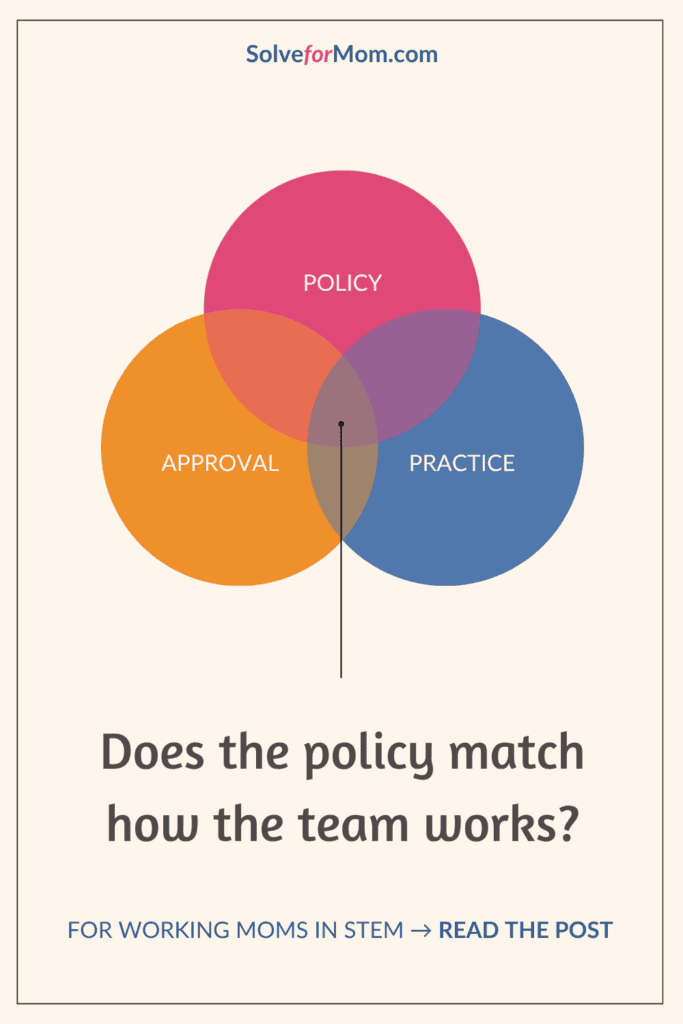
What do the answers actually confirm?
How to confirm flexible hours before accepting a job
When an interviewer says “we’re flexible,” you’ll still want to understand what that means for the schedule you need. Are they saying the arrangement is available for this role, or that they’re open to discussing it? If someone else needs to approve it, that part is still unresolved.
Talk through any limits, such as busy periods or coverage needs, without trying to plan every possible scenario during the interview. If the manager needs to check with someone, ask when you can revisit the question.
Hypothetical example: You ask about leaving at 4 every Tuesday, and the manager says, “That should be fine except during releases.” You could follow up: “How often do release periods happen, what hours would I need to cover, and who can confirm whether that Tuesday finish time would be available?” Until those details are clarified, record the arrangement as conditional.
Before accepting, make sure you and the hiring manager have the same understanding of any flexibility you can’t do without. You could ask, “How would we confirm this arrangement?” If it’s essential to your decision, ask whether they can include it in the offer or confirm it by email. You’re looking for a shared understanding of what’s been agreed.
Pick one tip to try today
Give yourself 5–10 minutes:
- Write one arrangement you need, including days or times. Mark it nice-to-have or deal-breaker.
- Choose 1–3 questions from the bank, including a direct question if it’s essential. Leave space to record each answer, any conditions, who still needs to approve the arrangement, and what you need to ask next.
- Note whom at the company you’ll ask.
What to notice: Does your wording ask about the arrangement you need, or only whether the employer considers itself flexible?
Success today: One to three questions ready, with an idea of whom to ask. Start there.
Key takeaways
- Separate preferences from deal-breakers before choosing questions.
- Ask about hours and location separately.
- Explore both ordinary work and a relevant busy period.
- Follow indirect clues with a direct question about an essential need.
- Record conditions and outstanding approvals before relying on a positive answer.
FAQs about asking for flexibility in an interview
Start with core hours, recurring start and finish times, and fixed responsibilities. Questions 3–5 help you establish which parts of this role's schedule can move.
Raise an essential arrangement early enough to resolve it before making commitments. There isn't one interview stage that answers every candidate's situation.
Summarize the schedule, frequency, conditions, and approval still needed. Ask the person responsible for confirming the arrangement to respond explicitly.
You can phrase the question around your availability: “I need to finish by 4 on Tuesdays.” Choose how much personal context to share; you don't need to build your question around your children's details.
Ask about your specific recurring need. “Would that include leaving by 4 every Tuesday?” is more useful than trying to interpret enthusiasm.
Name the difference neutrally: “I heard that start times can vary, but this team starts together at 9. What would apply to this position?” Keep the question open until the relevant person clarifies it.
Take the Career Alignment Diagnostic
If preparing your interview questions brings up bigger questions about how your career fits with motherhood, you can take the Career Alignment Diagnostic as an optional next step. Use the interview questions here to investigate the role; the diagnostic is for broader career-life reflection, rather than a prediction of how a particular job will work out.